The Vines of Mendoza | Blog

Winemaker’s Night: Soluna & Bodega Furlotti

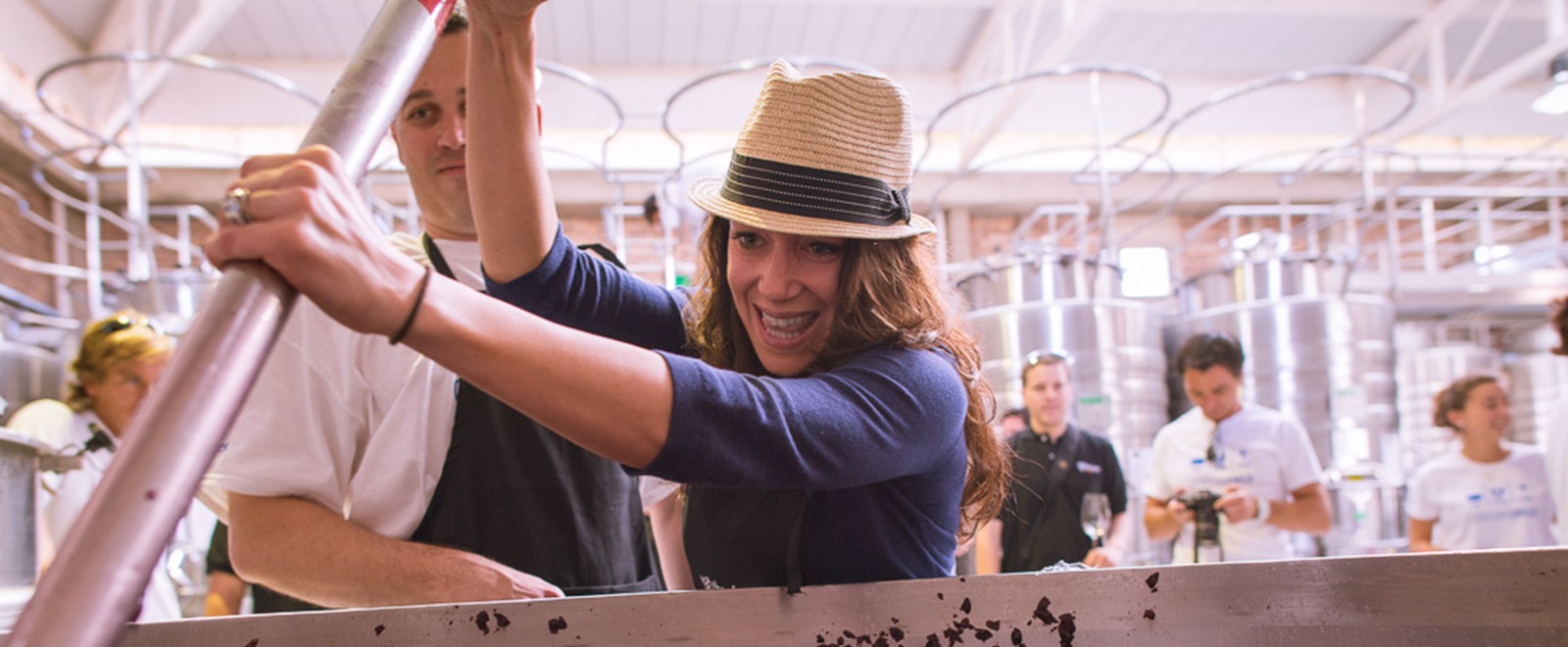
313903_144131279019596_1510963157_nBack on April 3rd, The Vines of Mendoza Tasting Room was filled with tourists and locals who came to taste Bodega Furlotti and Soluna wines with their winemaker Mark Weiss and the owner Gabriela Furlotti. The winery was created by an Italian immigrant, Angel Furlotti, who started a winery over 90 years ago. To this day his granddaughter Gabriela continues the tradition in winemaking and in 2006 she started a Fair Trade focus.

Presenting wines from the family’s Fair Trade project, Soluna wines, Mark explained how the family and winery work with these principals to support a co-operative of producers. The co-operative of 19 producers ensures that the grape providers all receive a far price for the grapes and also create funds to be used towards social projects to help improve the quality of life for the producers.

Although the trend in Mendoza is for wineries to own their own vineyards, Gabriela remembers as a child living in a time when the ‘contratista’ method was popular for grape production. This is something that Bodega Furlotti and Soluna try to preserve and protect. A ‘contratista’ may not be the owner, but they are employed full time and live on the vineyards with their families (and most likely children who continue their work) to take care for the vines and employ harvesters and train others, and they share part of the profits of selling the grapes. It is a way of giving vineyard workers more pride in their work and was the way many locals came to own vineyards eventually.

Mark told us a few anecdotes of how the co-operative and Fair Trade helps the producers. One example was of a grape producer who had his mule stolen, leaving him without his ‘engine’ to till the land and transport materials. The co-operative (funded by Soluna wines) gave him money to buy a new mule.

Another of the key factors of the Fair Trade initiative is to buy grapes from producers who have old vines. Many producers in Argentina sadly rip out their historical vines to plant more profitable crops losing some of the most treasured vines in the country. Their intention is to protect these old vines and give the producers a good price to ensure that the winemaking story continues into 540373_271274312971958_261516331_nthe future on a local level.

Simple initiatives and protection to producers like this is an important aspect of helping preserve wine culture in Mendoza, and it was a very informative evening exploring the ways in which wine drinkers can help support projects like this just by buying a bottle. There’s nothing wrong with drinking wine and feeling good about it!

The wines we tried:

Soluna Cabernet Sauvignon, 2011: A ripe, rich berry Cab with a trace of pepper on the nose and an easy mouth feel and a lingering finish. Taken from a blend of three vineyards from Lujan de Cuyo and also one producer from the Uco Valley, this wine is fresh and for is a Cabernet Sauvignon that you could drink alone.

Soluna Malbec, 2010: With an impressive colour, this three year old Malbec shows considerable elegance for its entry level price point. Taken all from Lujan de Cuyo, the wine is resplendent of primary fruit with a very balanced structure and an attractive finish.

Soluna Malbec Primus, 2007: This icon wine for Soluna is so dark in colour you can see why Malbec was called ‘black wine’ centuries ago. Rich and intense in the nose, the mouth is filling and round with an impressive acidity for a six year old wine. Aged in newer oak for 16 months you can note the tighter structure giving it a greater aging potential and some aromas of leather and meat. A single vineyard wine taken from one of their long term producers who owns a vineyard with 110 year old vines and still uses horses to till the land.


Afterwards, I chatted to owner Gabriela Furlotti, who is the third generation in her family to do winemaking in Argentina, about her memories and why Fair Trade is important.


What is your first memory of wine?

The harvest. It is always the harvest! I remember the truck coming into the winery. To go see the grapes being put in the lagarde. As a kid, that was something to observe!


What do you think is special about the way Soluna works?

Easy. The interation with the producer that develops a long relationship. Price is important, but the main, core thing of Soluna is the relationship with the producers.


How would you describe Malbec in three words?

In three words?! Easy, soft tannins, sweet, mainly easy to drink – that’s why it’s so successful. Easy to drink – 3 words.

There’s a lot of Malbec because the normal consumer drinks Malbec, it is easy.


What do you hope to see in Argentinean wine in the next 10 years?

To see more small producers. To see that small wineries stay in the market… Every day it is really dificcult to stay in the market and stay profitable. I hope many still can. It is great to have small producers, that’s what makes Argentina different. 

For more info about Furlotti and Soluna visit www.bodegafurlotti.com

Winemaker’s Night has finished for the season, but will be back at The Vines of Mendoza’s Tasting Room in September.


amanda grapepicking touchedAmanda Barnes is a British journalist living in Mendoza, enjoying the wine and raising a glass every day to some of the great initiatives of wineries like Bodega Furlotti for protecting their own wine culture and workers through education and interaction.


All good vegetables go to heaven…

foto-header07

It’s generally bad news if you are a vegetarian in Mendoza. Even die-hard veggies tend to take a ‘sabbatical’ from not eating meat while in Argentina. Otherwise sometimes you are just left with potatoes and bread, and that a healthy diet does not make…


There is however one place just outside the city which acts as a sort of Shangri-la for vegetables. Govinda is in Godoy Cruz (a five minute cab ride from the city) and as well as selling incense and a bunch of meditation garb, it serves up some of the best vegetarian food in the city. And has a lovely outdoor patio garden to boot! Very zen.


Three counters are filled with a ‘help yourself’ buffet with dishes of all colors and aromas, with one thing in common – no carne in sight! Try out some of their different curries and interesting salads, or go for the classic ‘Argentina does vegetarian food’: a soya milanesa or a ‘pancake tower’ with tomatoes, carrot, mayo and lettuce.


In line with its healthy ethos there’s sadly no booze available but you can get a decent ginger ice tea. Although even vegetable heaven has its naughty side: don’t be surprised to see some decadent desserts slathered in Dulce de Leche with whipped cream…


Govinda, San Martin 948, Godoy Cruz.


amanda grapesAmanda Barnes is a British journalist living in Mendoza and indulging in the green stuff as often as she can keep herself away from the melt-in-your-mouth beef. If you skip the meat for lunch surely Dulce de Leche is justified, right?


Going in Blind: Blind Tasting at The Vines of Mendoza Tasting Room

Of the wine flight options in The Vines Tasting Room, the Blind Wine Tasting sounded like the best way to enjoy a Friday night out.

We find a table near the window, at the 1194 Belgrano location in the city, and wait for Emilce, our wine and blind tasting guide, to give us instructions. She explains that she’ll be pouring 2 whites and 3 reds, and that though she would give us some hints along the way, it would be up to us to determine what exactly we were swirling and sipping.

Emilce fills the first two glasses with yellow liquid that glistens under the white light of the tasting room.  Each wine bottle is carefully wrapped in a towel so that we won’t see the label as she pours.

The first glass is a pale yellow, the color of chamomile tea when you let the tea bag steap only for a moment.  And it shone, bright and awake, inviting us in. I swirled, and shamelessly stuck my nose deep into the bowl of the glass, taking in a long drag of sweet citrus aromas. “Yummmmmy,” I said, clinging to the ‘mmm’ like I clung to the stem of the glass, and took the first of five sips. Torrontes. Absolutely.

As we continue swirling, trying to get the wine to give us some hints, Emilce told us that we were drinking a wine from Salta, harvested in 2012 from a winery known as El Porvenir. I was sure of it now, a bright citris wine from Salta, pale yellow.  It was Torrontes.

The second liquid was roasted corn yellow, dark and golden.  It quickly slipped down the edges of the glass as I swirled, and filled my nose with sweet white peach and apricot.  But there was also a kind of astringency – a smell I can never quite name beyond knowing that what I am smelling is oak. An oaked white… had to be Chardonnay.  Right?

Then came the reds.  Three on one, they stared at me and seem to cackle maliciously.  The two glasses of golden yellow wine seemed quite inviting compared to this threesome – three reds that all had slight hints of violet, all smelled of mature red fruit and oak, and all cut into my premature confidence.

After fifteen minutes of swirling, sipping and swapping ideas, I was at an impasse. My notes were covered in scratched out names of red varietals, and our noses and palettes were confused beyond help. Statistically, one of these has to be a Malbec, I thought, which is usually the case in Argentine wine tastings – it would be wrong for the flagship grape not to make an appearance. And, according to Emilce, I was right.  One of them was Malbec, just not at all the one we thought it would be.

When we´d swirled and smelled and came up with the best we could, Emilce grabbed the bottles and gave us the answers.  Here´s what was on the hidden menu:

1. Bodega El Porvenir de Cafayate, Laborum, Single Vineyard Torrontes 2012
2. Bodega Mauricio Lorca, Poetics, Viognier, 2011
3. Zorzal Gran Terroir, Pinot Noir 2011
4. Mairena Reserve Bonarda 2008
5. Atimisque Malbec 2009, Valle de Uco

On the walk back to my apartment, I reviewed our scorecard: we had gone 1 for 4, but at least I felt the lightheaded hug of the wines comfort me in our defeat.  It was ok, we were learning.  And for going in blind, we had come away with a much clearer idea of what it was we were looking for.

In the end, it wasn´t exactly the success I´d hoped for, but the tasting did give me a greater appreciation for the way a winemaker can mold his wine into an obvious expression of the varietal, or into something entirely different.  And though we didn´t exactly nail the two white wines, we did get much closer with the whites than the reds.  There´s so much room for the winemaker to play in the making of red wine, so many more decisions for him to make that change the expression of any one varietal – how long to leave the skins in, to ferment in or out of the barrel, to use a barrel at all – and if so for how long, and on and on and on until practically every taster is blind to the varietal that started it all. _______________________________________________________________________________________________________

Madeline Blasberg Madeline Blasberg is a twenty-something American travel writer living in Mendoza for love and love of wine. She finds that Going in Blind is usally what life demands, and there´s more fun to be had when you don´t exactly know the way.  


How to make: Alfajores de Maizena

Alfajores (Al-fa-Hor-es) are the chocolate chip cookie of Argentina. Well, sort of. They are everywhere, and everyone claims to have the best recipe. And while, at first glance, the Alfajor looks like a simple dulce de leche cookie sandwich, it’s a sweet treat that commands a little more respect than your grocery isle freeze and bake variety.

Like wines in Argentina, every region likes to put its own spin the Alfajor, and Mendoza’s flagship dessert is non-other than the Corn Starch Cookie. But oh so much more delicious.

Alfajor de Maizena Argentina The Vines

That being said, the Alfajor de Maizena (Corn Starch Alfajor) is one such simply blissful food, that comes to me thanks to a time-honored Mendoza tradition and a bit of chemistry I don’t understand.

DSC05120

Here’s how it goes:

Alfajores De Maizena

The Traditional Recipe

1. In a medium sized bowl, sift together 100 grams of all-purpose flour, 400 grams corn starch, and ½ tsp. of baking powder. Mash any clumps of flour with the back side of a spoon, and gently stir the mixture until well combined.

Alfajor de Maizena The Vines of Mendoza Argentina
2. In a separate bowl, using an electric mixer, beat together 200 grams of softened butter and 150 grams of sugar. The mixture will begin to become creamy and fluffy.

3. Continuing to beat slowly on low speed, incorporate 3 egg yolks, the zest of one lemon, a splash of vanilla extract and a splash of rum. Once all the ingredients have been added, continue to beat for 1 minute more, until everything is thoroughly incorporated.

4. You should now have one bowl of dry ingredients and one bowl of wet ingredients. Mix the two together by slowing pouring the flour mixture into the second bowl, beating with the electric mixture on medium speed.

5. When the mixture begins to firm up, pour out all the ingredients onto a clean work surface. Use your hands to gently press the flour into a ball (avoid overworking, as you want the cookies to be light and airy).

Alfajor de Maizena The Vines of Mendoza Argentina
6. You’ll find that some of the flour and cornstarch does not incorporate. At this point, add 1 egg white and incorporate as much of the dry mixture as possible, leaving some aside for rolling. You should end up with a scone-like dry dough that barely forms a ball.

IMG_7407
7. Roll out the dough into ½ inch thick and cut with circular cookie cutters.

Alfajor de Maizena The Vines of Mendoza Argentina

8. Bake at 300°F for approximately 8 minutes, or until the dough is just cooked through but not golden brown. You want the cookies to be cake-like, not crispy or crunchy.

DSC05111
8. While the cookies are still hot, carefully remove them from the baking sheet and allow them to cool over a baking rack.

9. Carefully paint the flat side of each cookie with Dulce de Leche and roll in toasted coconut flakes.

DSC05115


_______________________________________________________________________________________________________

Madeline BlasbergMadeline Blasberg is an American travel writer living in Argentina, and thinks that some days happiness is rolling alfajores in coco while listening to Reggae music.  


Still ruling the roost: Azafran

10One of the most referenced restaurants in Mendoza city, Azafran has long earned its reputation as one of the city’s top restaurants. It was one of the first I went to when I came here four years ago and recently I decided to go back and see if it was still worth all the fuss. The simple answer is, yes.


There were still some of the same dishes that I tried those many years ago, however that was not disappointing as I firmly follow the saying – if it ain’t broke, don’t fix it. So my friends and I happily tucked back into some old favorites.


Originally a deli, Azafran evolved into a restaurant after making its mark for stocking delicious products from around Argentina. It still functions as a deli with shelves lined with delicious conserves, sauces, spices and a booth where you can buy cold cut meats and cheese. So notably the menu also has some of the classic Argentine ‘picada’ style smoorboards.

04

The rest of the menu is much more fusion style. Head chef Pablo Ranea studied cooking in Spain as well as other parts of the world and you can see some of this global influence in what otherwise is a very ‘Argentine’ menu using almost exclusively local ingredients.


Starters and mains see a nice combination of seafood, meat and the beautiful vegetables of Mendoza. The dish I actually came back for after 4 years is still in my opinion one of the key players of the menu: a pastry wrapped steak with blue cheese and spinach stuffing, and a red pepper sauce and sweet potato – an Argentine version of a beef wellington, and with steak from Argentina, it’s a real triumph.


Desserts should not be missed. Even if you don’t have a sweet tooth you need to get on the dessert train for the night, because you’ll regret it if you don’t and spend the night looking longingly at your neighbors. Warm molton chocolate cake, Dulce de Leche creme brulee, White chocolate cheesecake… get the picture?

23

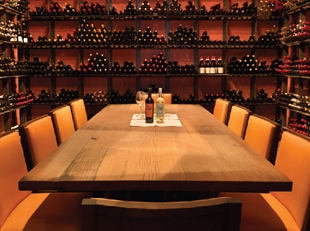
The highlight of this pretty, and usually very busy, restaurant though is the wine cellar. Hundreds of labels, you can find some unusual wines from all over the country and the head sommelier is great at helping you pick out the perfect bottle for your tastes. There’s also some pretty decent wine by the glass – a good thing in anyone’s book. The cellar is also home to the most prized table in the restaurant: a round table surrounded by rows of gleaming wine bottles. Intimately private, and also a cool air-con option in the warm Summer.


For more info visit Azafran on Sarmiento 765 or www.azafranresto.com

It can get pretty packed so beat the crowds and waiting time by avoiding peak hours at weekends.


amanda glassesAmanda Barnes is a British journalist living in Mendoza and making sure she keeps regularly visiting the best restaurants in the city, for professional reasons of course.


Looking back on a mid-harvest Winemaker’s Night: Cantinian

46784688About two months back, right in the middle of harvest, Cantinian winery came in to Winemaker’s Night to show us their wines. Owner Dana Rothkop and winemaker Lucas Gimenez were at day 3 of their 6 day harvest and as a special treat they brought a freshly pressed must of 24 hour Malbec juice for the tasting room. This was a great way to start the evening and an opportunity to taste the raw product before it is fermented into wine!

As we enjoyed the incredibly colorful juice, Dana explained that he and his wife Debbie came to Argentina from their native Canada a four years ago and fell love with Argentina and its lifestyle. They decided to start looking for a vineyard and found a special property of 90 year old vines in Lujan de Cuyo only 20 minutes from the city. They were wine lovers before but had no formal experience in wine and so when they started they very much relied on local experts and advice to start the project. As an ode to this partnership between Canadians and Argentineans they named their brand Cantinian.

Their labels which feature Canadian and Argentine characters are also a cheeky play on the relationship. If you scan in their barcode with your iphone you can see the characters share conversations in humorous accents, and the website is filled with the different characters.

They bought just over 10 hectares of land and use all their own grapes for their boutique production of wine. Since the very start they made the vineyards organic and this year (after the mandatory four year detox) they achieved their certificate for organic vineyards. Knowing that the vines are treated with the upmost care we moved on to taste some of their tasty wines…

bottle_1The wines we tried

Classic blend: This entry level Malbec-Cabernet blend is a mellow mix of fruity malbec with a touch of the more powerful Cabernet spice. A good quality wine for the very accessible price of $59 pesos.

Malbec 2010. Their entry level Malbec which is fermented with oak staves in the tank, this wine has a really impressive colour and concentration. A red fruit driven wine with a hint of oak throughout the process. $50 pesos

Cabernet Sauvignon 2010. A spicy Cab with great black fruit and some different pepper notes in aroma and in the mouth and a longer finish with hints of chocolate. $50

Cantinian Reserve 2010. With a much more present oak influence after 18 months in barrel, this wine is filled with lots of tertiary aromas of coffee, vanilla and chocolate. A mouth filling wine with soft fruit expression and delivers on ticking all the boxes. $90


Q&A

After enjoying the wine and cheese, I caught up with winemaker Lucas Gimenez to talk a bit about wine and working with Canadians.

How would you describe old malbec vines in three words?
Concentration, challenging, deep roots.

Do you think biodynamic wines are a fad or do you think most people in the industry will be aiming to go biodynamic within the next 10 years?
I think everyone in the industry will be aiming for organic but I think biodynamic is a fashion. The organic part for Cantinian is our lifestyle, we really care for the soil and the water.

In addition to Malbec, which other varieties do you think are very promising for Argentina?
Cabernet Sauvignon, Sauvignon blanc and my favorite red is Petit Verdot.

Obviously Dana and his wife have enjoyed learning from the Argentinean culture, what have you enjoyed learning from their Canadian culture?

I really enjoy it. They are very easy and simple people to work with and you should go into the vineyards and see how hard Dana works during the year. He is not a boss, he is a partner.

What’s your favorite moment to enjoy a good wine and with who do you like to share it?
Always with friends, my girlfriend and my family.

Do you have any favorite wines to enjoy with friends?
The Reserve Cabernet Sauvignon of Cantinian, most of the Malbecs from the Uco Valley. My winemaker style is to respect the variety and not have the oak overshadow the variety.


amanda grapepicking touchedAmanda Barnes is a British journalist living in Mendoza and enjoying all the mix of wines, people and cultural collisions!


Fire in the Vineyard (Week 7) – Chapa

Dessert.  Go ahead and say it out loud with me, Dessert. The word alone just sounds tasty, and for most of us brings to mind the delicious finale of a good meal.  Here in the Uco Valley, among the vines, under the shade at The Vines of Mendoza as we finish up a busy season of amazing meals and unforgettable memories at Francis Mallmann’s Siete Fuegos Asado, it seems fitting to conclude the Siete Fuegos Recipe series with dessert.

The final cooking technique we’ve yet to highlight from Francis Mallmann’s inspired cookbook “Seven Fires: Grilling the Argentine Way,” is the Chapa, which literally translates as “a piece of sheet metal” however in the context of this cooking method refers to any flat cast-iron surface or griddle use for cooking over an open flame.  This is the method of cooking that Mallmann utilizes most often for the recipes in his book.  The recommended ideal size for a chapa is “30 inches square on legs 12 to 15 inches high”.

DSCN2559 (1024x768)

And so… on with dessert!  The following recipe has been abbreviated and can be found on page 234 of Mallmann’s Seven Fires cookbook.

DULCE DE LECHE PANCAKES

Ingredients:
- 1 ½ cups all-purpose flour
- ½ teaspoon salt
- 4 large eggs
- 1 cup cold water
- 1 cup cold whole milk
- 4 tablespoons unsalted butter, melted
- 6 tablespoons clarified butter
- 6 heaping tablespoons dulce de leche

To make the batter, whisk the flour and salt in a medium bowl to combine. Break eggs into a large bowl and whisk in the water and milk, then the melted butter. Sift in the flour and salt, whisking to blend. Refrigerate for up to one day.

Melt 1 tablespoon of the clarified butter in a crepe pan or cast-iron griddle. When foam begins to subside, ladle in a generous ¼ cup of batter, tilting the pan to swirl the batter into a thin circle or using a spatula to spread evenly over the surface. Cook until lightly golden on the bottom, roughly 1 – 2 minutes, then turn and cook the other side for 1 minute. Spread each pancake with a heaping tablespoon of dulce de leche, roll up as you would a jelly roll and enjoy.

DSCN2567 (1024x768)

Here at Siete Fuegos Asado these are served with a healthy dollop of whipped cream and Mallmann’s Burnt Oranges with Rosemary (recipe on page 222) or seasonal fruit, such as peaches and plums, also lightly seared on the chapa, along with a glass of The Vines Rosé Malbec.

For those of you who weren’t able to make it down for Siete Fuegos Asado this season, do not despair!  Coming later this year we’ll celebrate the opening of the formal Siete Fuegos Restaurant here at The Vines of Mendoza as part of the grand opening of The Vines Resort & Spa, and we hope to see you all there. So stay tuned … much more to come!

DSCN2619 (1024x768)

Until then…. que lo disfruten!

DSCN3362 A transplant from the Pacific Northwest, Ryan Nice is absorbing Mendocino culture like a thick dulce de leche pancake and is looking forward to the coming winter months. He and his wife Tiffany are ‘this close’ to adopting one of the good dogs in need here in Mendoza as well.


Tasting Sparkling Wine at Chandon – Argentina

One week into the year-long Wine Consulting course at the Wine Institute, I found myself in the midst of a field trip.  Early Saturday morning, 25 wine students, ranging in age from early twenties to late sixties headed out into Luján de Cuyo.  Chandon Argentina is a graceful giant of a winery, not so quietly turning out massive quantities of tiny golden bubbles.

IMG_7268IMG_7255

Gustavo, enologist/ agronomist/ herder of students, carefully shepherded us through what seemed to me to be a carefully managed, polished and shined wine-making machine.

At the end of the back-door educational tour that walked us through the two styles of sparkling wine and the history of Chandon, we took our seats at a long white wood tasting table. This was not like any other wine tasting I’d been to. What I’d expected would be a lineup of some of Chandon’s most distinct sparkling wines, turned out to be a tasting that fell a bit flat – on purpose. The four tasting cups before me were filled with what’s known as base wines, or the young varietal wines that will be blended together, undergo a secondary fermentation and turn into sparkling wine.

And this tasting came with its own set of rules. Rather than looking for the ideal expression of each varietal (typicity), we were told to look for balance: not too acidic, not too fruity. Our challenge was to imagine how these subtle flavors and faint citric notes could be put together to resemble something akin to a delicious espumante (sparkling wine).

“Estamos buscando asemblage,” the winemaker repeated, assuming we knew that meant to strive to find a balanced composition of wines.

IMG_7247

First in the lineup was a Semillion. Tapping into what I’d learned in class, I counted myself through the embarrassingly simple steps of tasting wine: See, Smell, Sip, Swallow. I was thankful no one could hear my thoughts. I was also thankful to be among students who also – on occasion – swirled a little too enthusiastically, and sent drops of wine flinging over the lip of the glass.

The soft, slightly sweet aroma that filled my nose completely eluded me. It reminded me of the fabric softener eisle, a smell that makes me want to wrap myself in recently laundered sheets. But bed sheets are not generally accepted as a wine aroma … so I didn’t raise my hand. The citric touch was obvious, lemon, lime and fresh citric zest were wafting around with every swirl of my glass.

Then came the Chardonnay, with a nose full of peaches and tropical fruit, and a far greater mouth presence and persistence than the flowery, citric Semillion that came before it.

And finally, the Pinot Negro, a slightly stained pink wine that reminded me of the glass perfume bottle that always sits next to my grandma’s sink. One wiff of the wine filled my nose with ripe strawberries (the kind that stain your fingers and bruise under your touch), fresh red fruits and ripe red berries.

The fourth and final wine was a blend, which will go through a second fermentation and become Chandon Brut Nature. This was the only wine in the lineup that seemed to make sense. Whereas all the other wines left me with the unsatisfied feeling of hearing only the tail end of a conversation, this wine actually said something: citric fruit on the tip of the tongue, light savory peach and white flowers in the nose, and a period at the end.

It wasn’t until the next day that I sat down to my computer to answer one question that persisted: what is assemblage? Turns out assemblage is an art form, in which artists pull together objects to create 2- and 3-dimensional works of art. (Thank you, Wikipedia.)

It’s not easy to take 3 young wines that are basically citric water and pull them together to create a wine that has personality and dimension. But that’s the challenge. These young wines are almost neutral wines, delicate flavors and slight citric tones, all of which will get stronger as they mature and earn their bubbles, in a manner of speaking.

“Sparkling wine is about the harmony of all the varietals,” said Gustavo, “not about the individual expression of any one.”

Asemblage.  I get it now.   

IMG_7260

maddie profile Madeline Blasberg is a twenty-something wine writer who knows that nothing can ever burst her tiny golden bubbles.  


The big smoke

imagesRecently the Masters of Food and Wine rolled into town at The Park Hyatt Mendoza. A flurry of food and wine events took place and one of the more interesting tastings of the Masters, and definitely the most naughty was the cigar tasting with different dessert wines and grappas.

For obvious reasons the tasting was out on the patio with Uruguayan sommelier Charlie Arturaolo and Argentine sommelier Agustina de Alba as well as cigar specialists. Puffing away on a couple different fat Cubans while tasting toasty and sweet wines is quite a fun experience and certainly one that opens your eyes as to how smoking can also be an educated taste. Thoroughly enjoyable and certain to score bragging rights with my Uncle.

Trying out different strengths and flavors of cigars you could see how different tabacco choices had completely different effects on the different varieties and characters of sweet wine and grappa. My favorite blend was the sweet Torrontes aged in barrel for 40 months (made by Zuccardi) which had a burnt caramel and orange taste which worked really well with the smoky cigar flavor and left a delicious Christmas taste in the palate.

Finishing off with the most intense cigar, a classic Montecristo No.4 of course, went really well with the Argentine grappa (made from Malbec grape skins). A more intense cigar surprisingly brings out the lighter more citrus characteristics of grappa.

Che Guevara would have been proud.

The Masters of Food and Wine is a special four day wine and food event held exclusively at The Park Hyatt Mendoza each year. There are additional Masters events throughout the year and you can find more information at www.mfandw.com.ar 


amanda grapepicking touchedAmanda Barnes is a British journalist living in Mendoza and who was born with the tastes of an old man: give her a whisky, cigar and some Steak Tartare and she’s golden.


Tierra Malbec Festival and a night of Food & Wine

Away from the buses and bustle of downtown Mendoza City, there is a quite green suburban oasis known as Chacras de Choria.  This affluent neighborhood hosted the Tierra Malbec Festival in it’s plaza, a weekend of food and wine pairings, washed down with live music and a stroll through artisan display tents.

The plaza, normally a wide open space where people came to sit on wooden benches and watch the steady stream of passersby, was now not so much a stream as a rapid current of wine drinkers hunting for another glass of something at one of the many booths.

These two weekend nights had enticed food and wine lovers out into the dusky spring nights and into crowded lines, all for a chance to fill a glass and sooth the grumbles of an empty stomach. I was among them, glass and tickets in hand.

When I stopped at the Norton Winery booth and saw the seared rib eye blanked in chimichurri, I knew 1 ticket was not going to be enough.


Tierra Malbec Festival

After purchasing my ticket, I entered the maze of booths with 5 tickets and a plan.  My tickets would get me 2 glasses of wine and 3 wine-food pairings.

The plaza was filled with stands staffed by winery-restaurant pairs, each offering a sip and a bite of their work.  Armed with my brochure of participants, I skimmed the menu, and stepped up to the first booth.

- Kaikén Malbec Rosé paired with Florentino Bistro’s shrimp salad of watercress, orange, pomegranate and raspberry vinaigrette

- Mostroeni Malbec paired with Tomillo’s mushroom stew served with a homemade crouton

- Norton Malbec paired with La Vid´s ribeye steak smothered in Argentine chimichurri atop toasted artisan bread

- Dolium Malbec paired with Rincón Huerpe´s chocolate brownie served with red fruit reduction and chocolate ganache a la Malbec.

Tierra Malbec Festival: Shrimp SaladTierra Malbec Festival

Two hours and five tickets later, I finished the gauntlet of food and wine, found a clean enough patch of pavement. I parked myself next to the curb to listen to the live band that was just starting to win over the gathering crowd.

I began the night with a strategy: to taste and savor, evaluate and ponder each aroma, to do mental battle with every indistinguishable flavor until I could label and understand it.  I was taking notes, I was asking questions, I was pondering, I was no match for the moment.

This was not a classroom, and if I didn’t put the notebook away I would miss that slow simmering joy of being in a plaza at night, running my fingers around the lip of my empty wine glass and feeling like life – in all its aggravating complexity – would always give me moments when things were simply good.

I walked back to the car across the wine-stained pavement and listened as the breathy notes of a distant bandoneón faded away.

Madeline BlasbergMadeline Blasberg is a Minnesota native who wandered out of the snow-covered tundra and into South America. She´s enjoying swirling wines, stretching out in large grassy spaces and enjoying the sweetness of an extended siesta every chance she gets.